Worksheets have their place — but for young readers, interactive, multi-sensory practice keeps children engaged and learning.
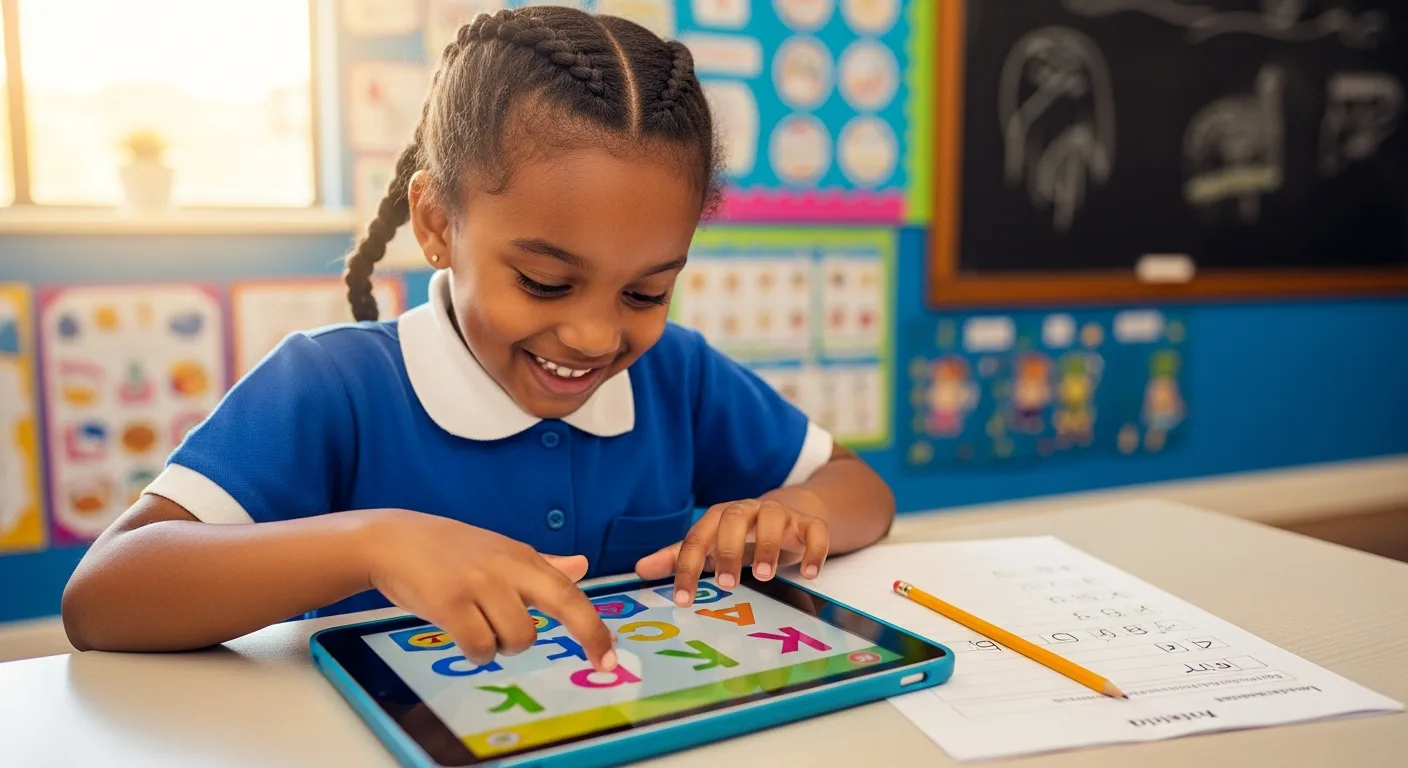
Worksheets are familiar and useful, but they ask a lot of a young child: sit still, hold a pencil, and work silently. Interactive learning meets children where they are — through play, sound and movement.
Tapping, tracing, listening and speaking use more of a child’s senses than a pencil-and-paper task. Multi-sensory practice helps new sounds and words stick.
An interactive lesson can say a sound aloud the moment a child needs it, and gently celebrate a correct answer. That immediate feedback keeps children trying — something a static worksheet cannot do.
Worksheets still help with handwriting and quiet focus. The goal is balance: use interactive lessons to build sounds and reading, and paper for the skills it suits best.
External sources open in a new tab. Saving Grace Education Group is not affiliated with these organisations.
Our CAPS-aligned programme turns these ideas into fun, interactive lessons. Try the first two lessons of every grade for free.
Help your child become a confident reader. Explore the CAPS-aligned Saving Grace Learn to Read programme — the first two lessons of every grade are free, no card needed.
